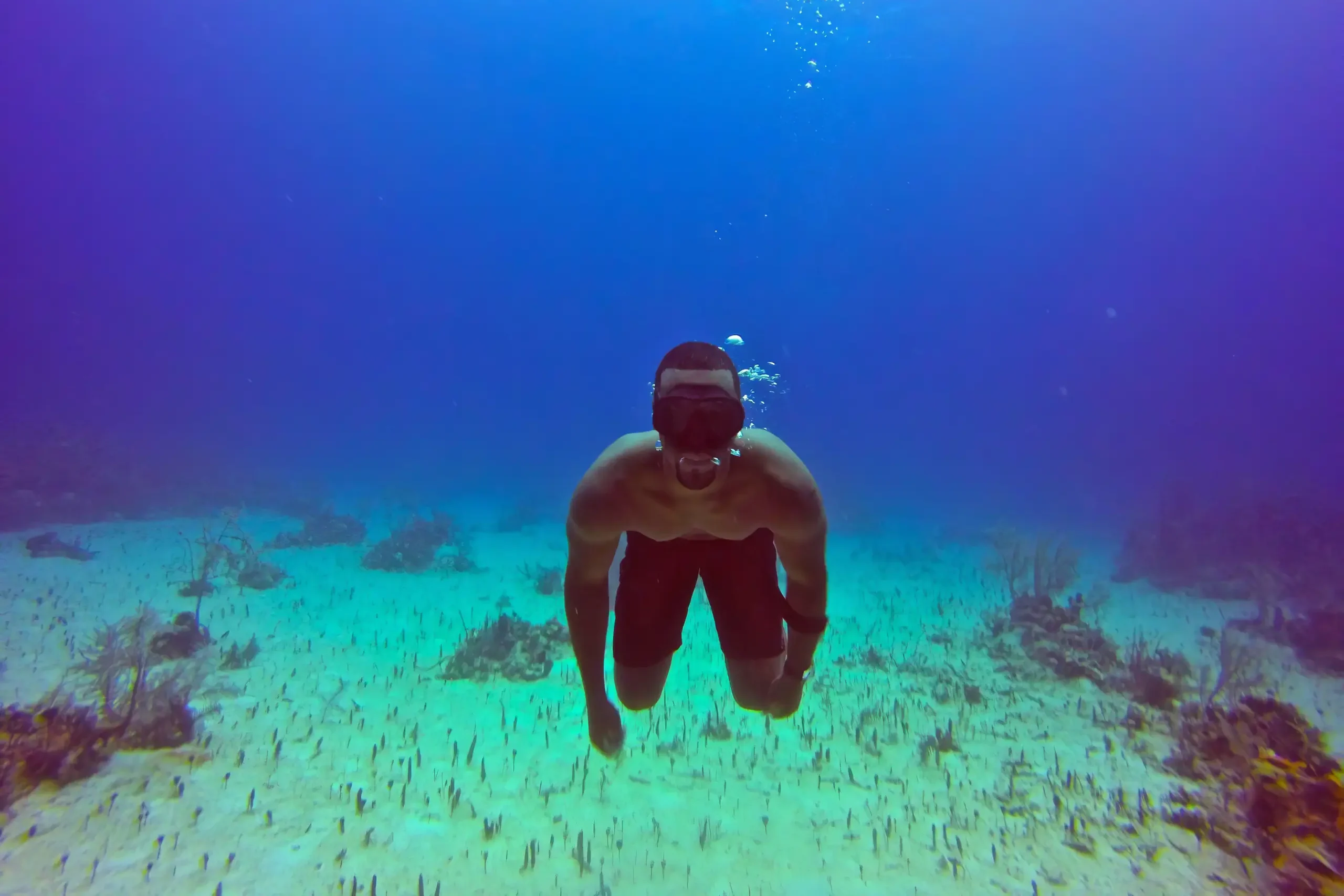
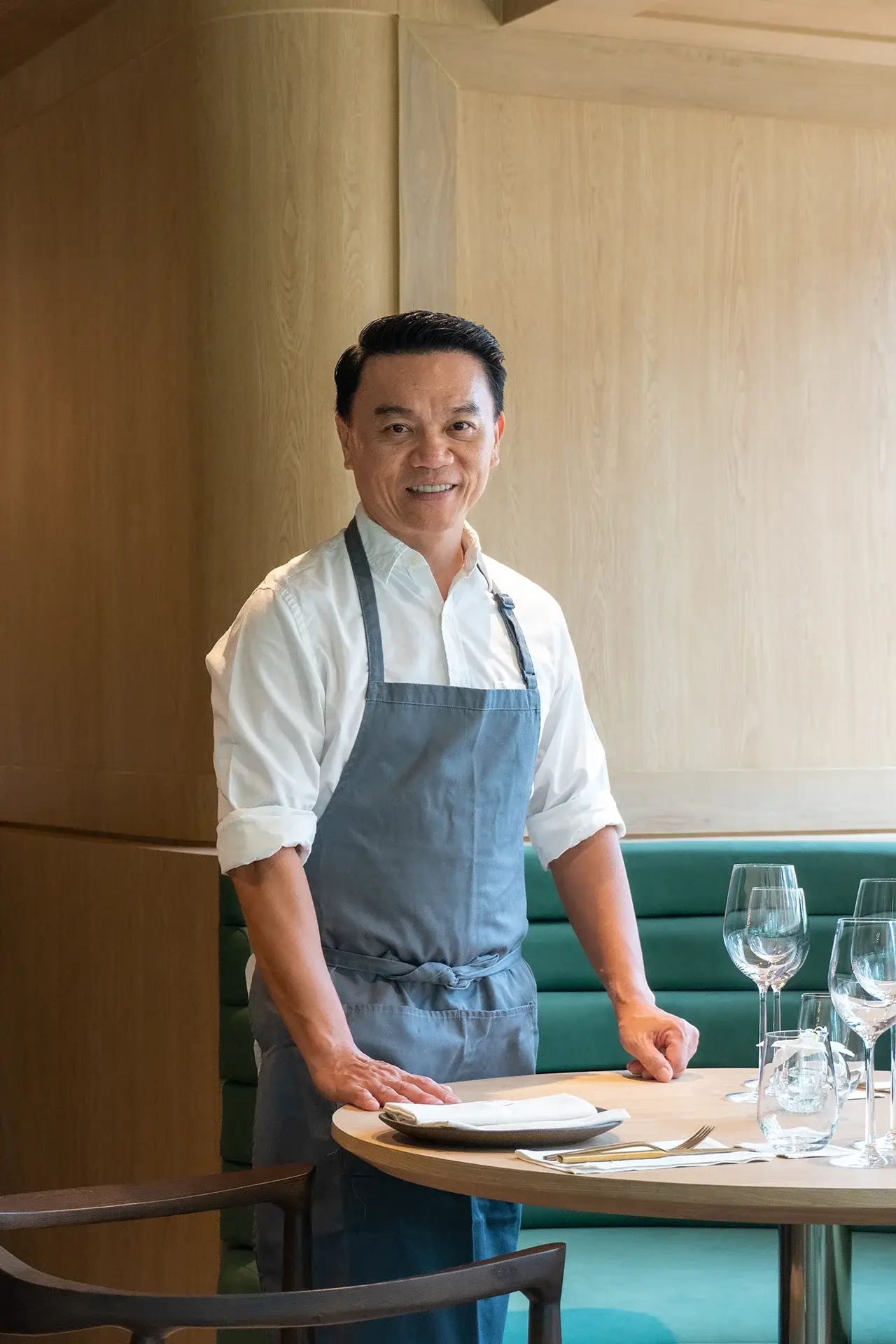
On his first flight into Nassau, Ian Kittichai did what every first timer does: he pressed his face to the airplane window. Somewhere between Miami and Paradise Island, the water shifted from navy to that impossible, crystal-blue that’s only in The Bahamas. “I saw the ocean and the color was so beautiful, light blue,” he told me. Later that day, he walked straight into the sea, still jet lagged. “I felt like I was
in a paradise,” he says.
It also felt familiar. Kittichai grew up in Thailand, and The Bahamas reminded him of home and the memories of the coast there. “[Those places were] just beautiful, scenic, the water warm, and many things that I would say are paradise,” he says.
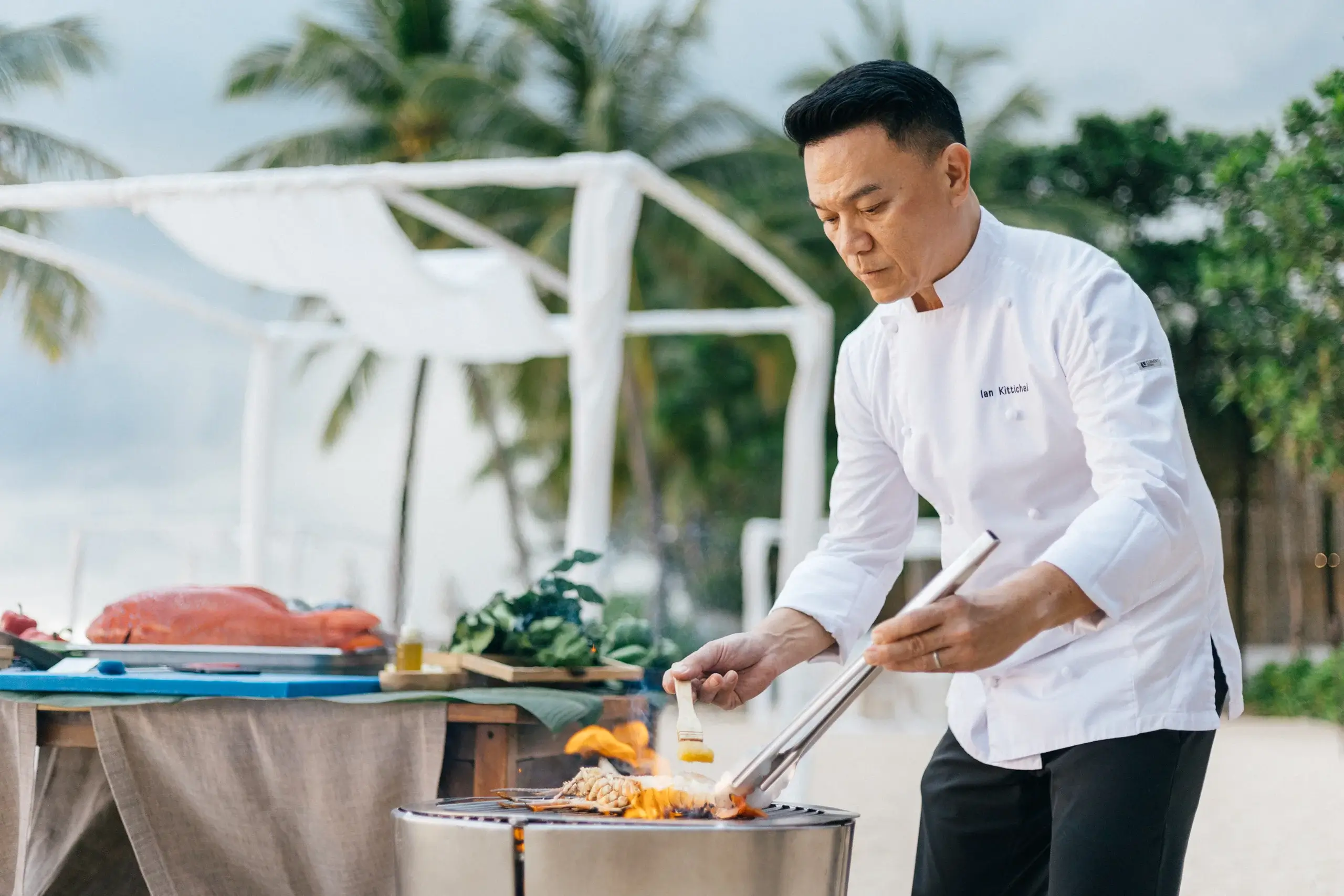
Now he has given that feeling a name: Kò Sà Wăn, which in Thai literally translates to “Paradise Island.” Kò Sà Wăn is his limited-engagement Thai dinner pop-up at The Cove at Atlantis through August 2026, taking over Perch in the evenings and turning a breakfast room with tropical-garden views into a nightly tour of Thailand. For The Bahamas, it is more than a seasonal special. It is a statement that this corner of Paradise Island can be as serious about dinner as it is about the beach — bringing in one of the most decorated Thai chefs working today and giving him the room to tell his own story in chili, lime and local lobster.
A Long, Global Road to The Cove.
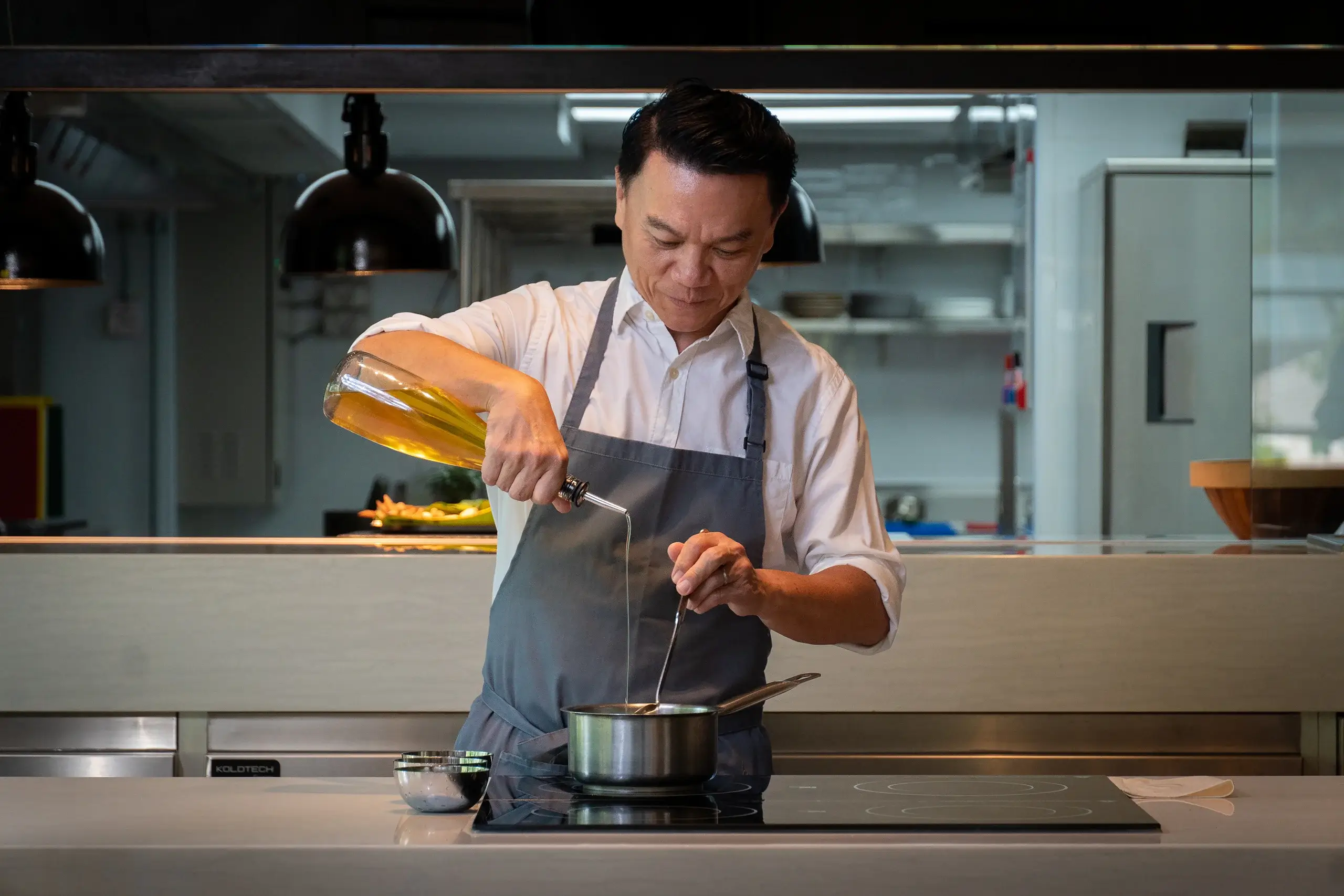
If you’ve followed modern Thai cuisine at all over the past two decades, you have probably crossed paths with Kittichai’s name. Born in Bangkok, he grew up helping his mother shop in wet markets in the morning and then pushing her curry cart through their neighborhood after school. A stint studying in London led to work at the Waldorf, then culinary training in England and Australia. He eventually returned to Bangkok and, at just 30 years old, became the first Thai national to be named executive chef of a five-star international hotel, running the kitchens at the city’s Four Seasons.
From there, his career went global. In New York, he opened Kittichai in SoHo, which quickly drew national attention as one of the most exciting new restaurants in America. Kittichai earned a coveted two-star ranking from The New York Times, and in his 2004 review, Frank Bruni wrote that the chef showed a “determination to find a balance of sweet, sour, salty and hotly spicy.”
In Bangkok, he launched Issaya Siamese Club in a century-old Bangkok villa, helping push Thai cooking toward a more contemporary, produce-driven style. Over the years he has built a small constellation of projects, from Bangkok to New York to Singapore and beyond, while becoming a familiar face on Thai television as a judge and competitor.
As his star rose, his restaurants kept earning praise, showing he wasn’t losing track of what was coming out of the kitchen. Issaya, the restaurant he opened in his hometown, landed on the list of the World’s 50 Best Restaurants, which wrote that the ever-evolving menu contained “delicious Thai flavors or signature dishes such as lamb shank massaman curry and jasmine flower flan, made with blooms fresh from the garden.”
Bringing Thai Flavors to The Bahamas.
Kò Sà Wăn itself started as part of Atlantis’s 2025 culinary refresh at The Cove. In May, the resort announced a limited-engagement Thai dinner at Perch, with Kittichai designing a family-style menu. The engagement was extended on the strength of demand, and the pop-up has since evolved into a recurring feature of Atlantis’ broader food-and-wine programming.
For someone with the kind of mileage that Kittichai has accumulated, a pop-up on Paradise Island could have been a simple brand extension. Instead, Kittichai treats Kò Sà Wăn as something more personal: a bridge between the islands of his childhood and this Caribbean one that now shares the same name in his language.
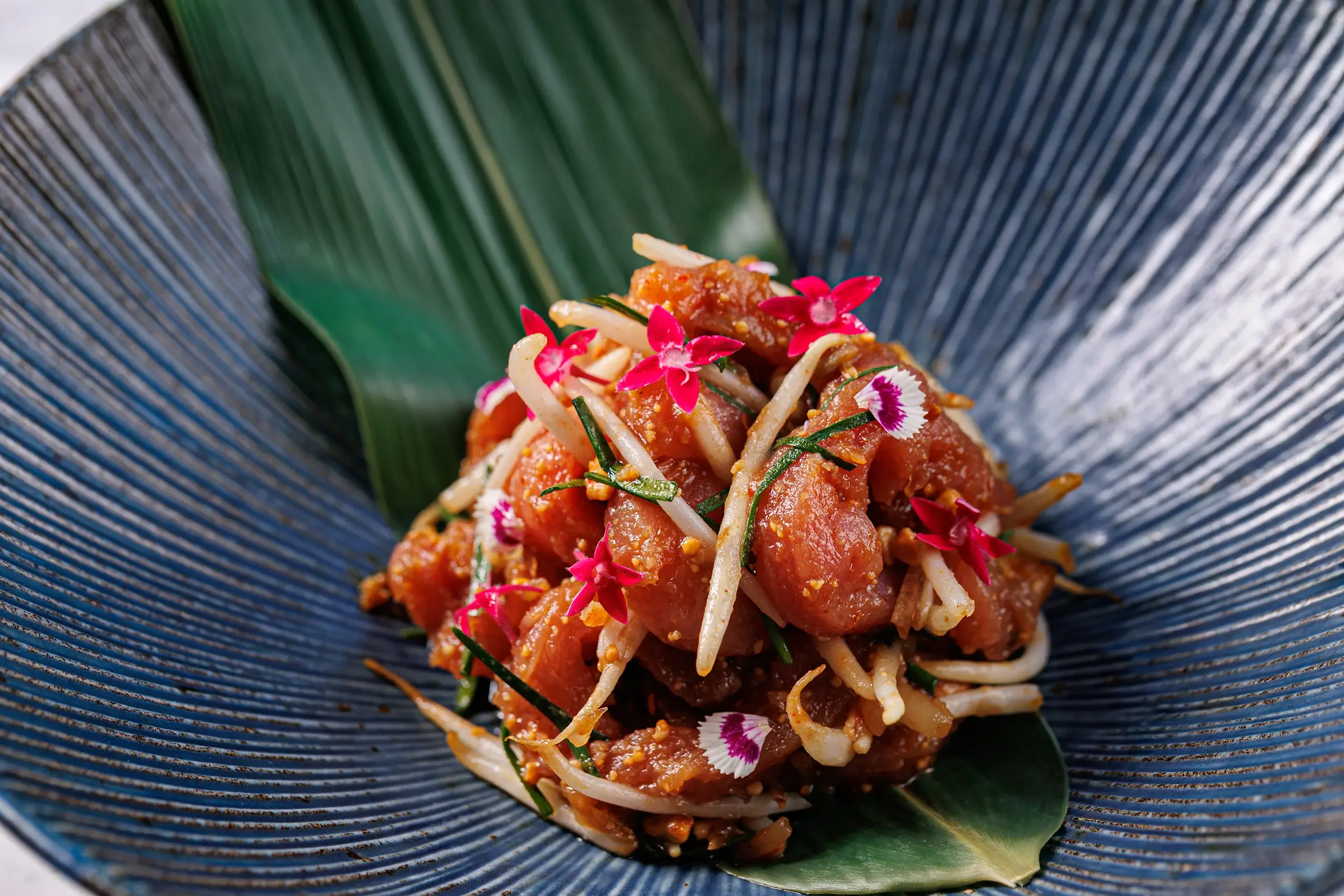
“Kò is island, Sà Wăn means heaven,” he explains. The menu is built like a map, running from the ingredients and street flavors of central Thailand to the seafood of the south, then folded around what he finds in Bahamian markets. Conch, grouper and Bahamian spiny lobster stand in for the catch from Phuket or Krabi. Som tam, the classic green papaya salad, shows up as an appetizer you can order with or without local conch; the bracing lime, the savory fish sauce and spicy chile brightening the sweetness of the shellfish.
One of his favorite examples of that cross-current is a grouper glazed three ways, a kind of Thai barbecue where palm sugar brings the sweetness, red curry paste delivers the heat and miso fills in the salty bass note. The seasoning is pure Bangkok, but the fish is Bahamian, a local staple that tastes suddenly new when it hits the table on a banana leaf.
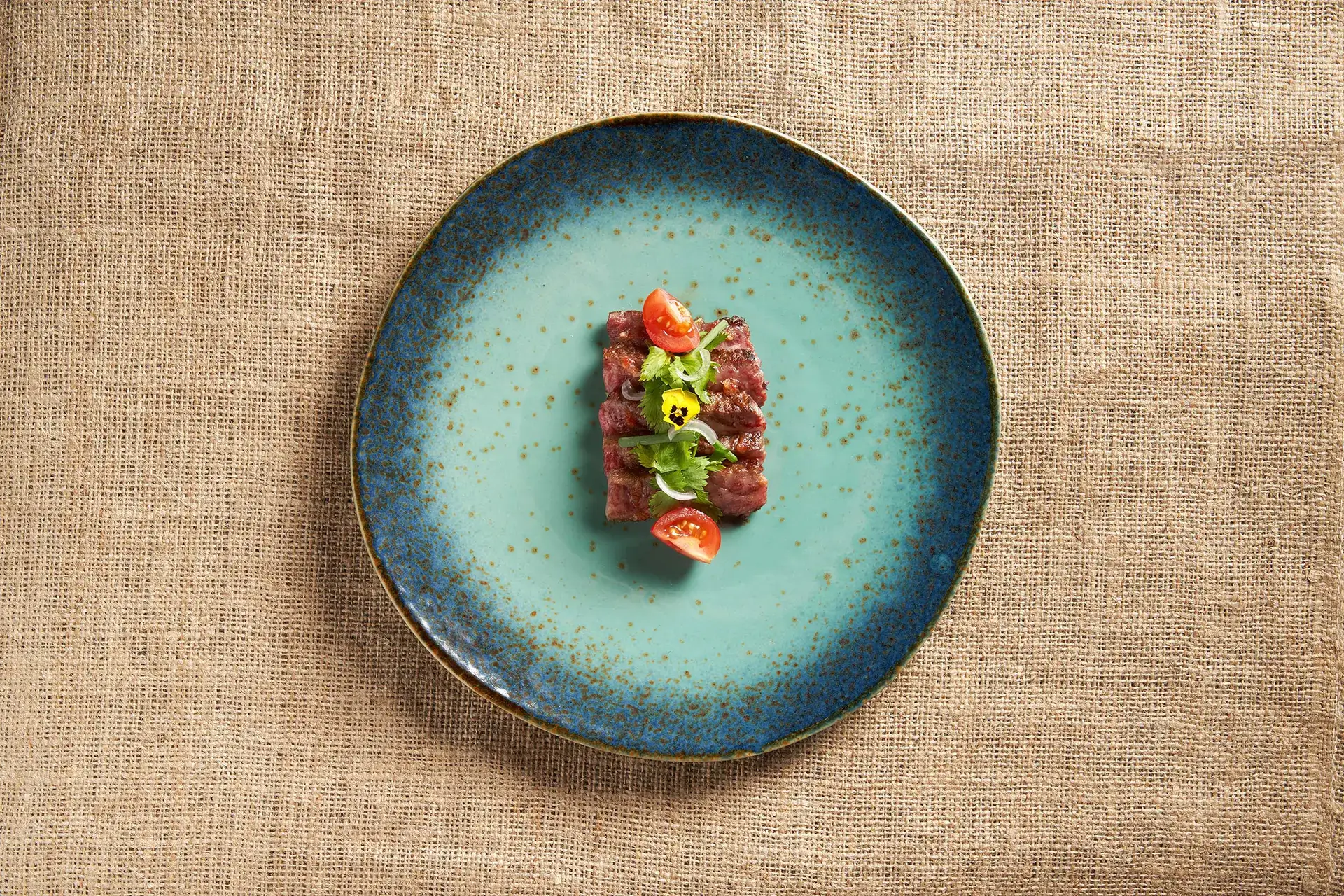
Kittichai is frank about how he builds the experience around resort guests who have spent the day in salt water and sun. “I know my audience and what they’re craving. They look on the menu and look at the protein first,” he says. So, he keeps proteins front and center: wok-fried scallops, short ribs, Wagyu beef, lobster pad Thai. Then he layers on aromatics, herbs and heat. This is not a “mild for the tourist” Thai menu. “I’m giving them a bold flavor in the authentic way people receive Thai food,” he says. “It doesn’t matter how hot the country is, people are craving chili.”
That philosophy shows up even in the vegetables. One dish starts with bok choy blistered over the barbecue, then tossed with lime juice, fish sauce, chile, culantro, spring onion and roasted rice powder. It lands somewhere between a salad and something you’d eat with sticky rice in Isan: smoky, citrusy, and loud enough to stand up to rum drinks. Gluten-free dishes are easy to find, too, not as a concession, but because Thai cooking leans naturally on rice flour and rice noodles instead of wheat.
Kittichai’s reputation travels ahead of him — street-cart kid turned global restaurateur, cookbook author, television judge and Iron Chef. But talking with him, it’s easy to get the sense that he still thinks of his work in simpler terms. There is a dish, a table, a family or couple in front of him. There is a word — sa wan — that he wants them to understand not as a translation but as a feeling.
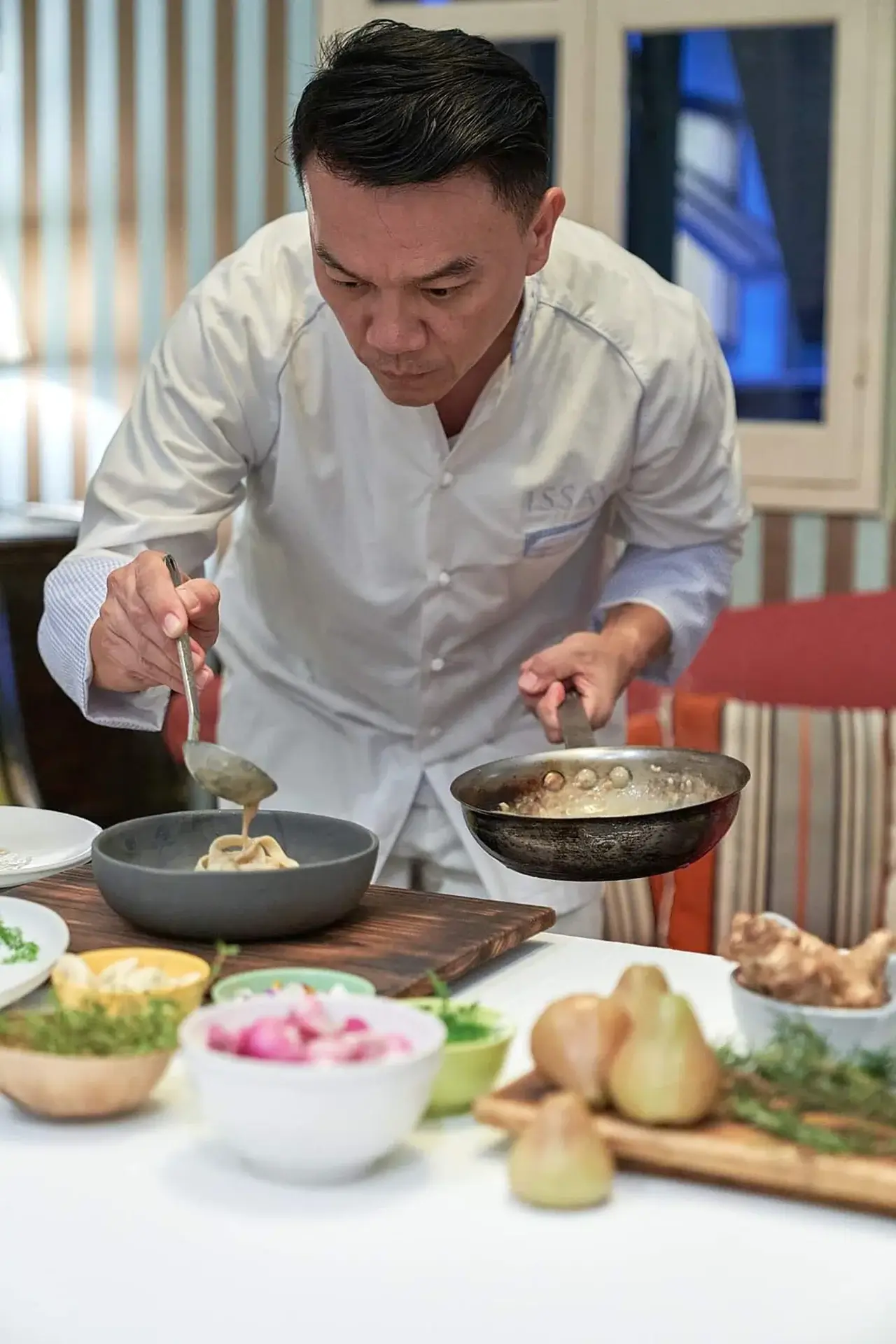
Family-style dining underpins the whole experience. Kò Sà Wăn
is meant to be ordered as a table, not as a sequence of isolated plates, and the room at Perch is set up for that — big tables, platters meant to be passed, the occasional kid peering over a bowl of noodles. One night during the first week, Kittichai noticed a family of five working their way through the tasting menu. The youngest, a five-year-old, was slurping chicken noodle soup with the focus of a food critic. After dinner, the parents asked the chef to sign a cookbook. They thanked him for cooking their meal. “And I was so happy,” he says.
He smiles when he talks about the name again, testing the syllables like a line of seasoning. “When you say this phrase to Thai people, it’s like a paradise. It’s heaven on earth,” says Kittichai. For a limited time, on this particular island, it is also dinner.